“You’re born with a spark... to search for the truth, for the best you can be. Practice. Discipline. Preparation. Try and try again. Then one day you‘re on top and they say you're an overnight success, ”a “natural.” You smile, you know.” - Anonymous
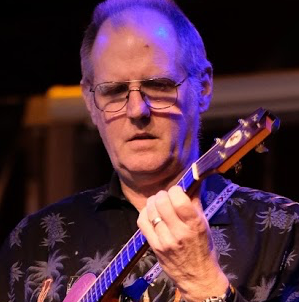
Technique is the physical control and coordination needed to play an instrument or sing. It is involves position, efficiency of motion and effort, as well as exercises to develop specific physical skills.
Theory is the body of principles behind music. It includes scales and chord building, intervals, progressions, resolution, harmony, motion, power, color, chord substitution, keys and time signatures, rhythm, melody, etc.
Ear Training is the development of the active and passive capacity to relate to music aurally. It includes the ability to regains melodic and harmonic intervals, chords, chord progression, rhythm, melody and harmony.
Reading is the ability to reproduce music from written notation. It includes five phases; note recognition / alternate note locations, rhythm recognition, fingering considerations, communication terminology and interpretation.
Repertoire includes the songs within the performance ability of the student. These songs maybe memorized or read. They may be literal reproductions or creative interpretations.
Improvisation is the ability to spontaneous to create melody over a predetermined chord progression. It involves scales, alternate fingerings, arpeggios, intervalic development, sequences, embellishments, superimposition, rhythm, motifs, development techniques and idiomatic considerations.
Musical Idioms is the study of music musical style it involves well developed categories as; Rock, Blues, Country, Jazz, Bluegrass, Classical, Folk, Urban and Fusion. It also includes subdivisions of specializations.
Songwriting is the creation of original music based on a single melodic line with a chord progression. Lyrics may or may not be included.
Arranging involves the choice of instruments, tempo, rhythmic feel, form, intro, ending, interludes, solos, harmonies, and instrumental accompaniment of a song.
Composition is the creation of original music based on multiple simultaneous and compatible melodies. It historically involves the classical forms but frequently includes more sophisticated levels of contemporary music.
Orchestration involves the choice of instruments for a composition. This choice is based on the ranges and colors of the instruments which best represent the mood and creative intent of the composer.
Interpretation involves the ability to perform a song or composition in a unique and personal way. These skills involve a interrelated set of disciplines which include, theory, ear training, technique, dynamics, embellishments, phrasing, and rhythmic flexibility.
Thanks to Chuck Anderson for permission to use the above copy
NOTE: PICS ARE FROM VARIOUS SOURCES. FAIR USE NOTICE:: This site contains images of which have not been pre-authorized. This material is made available for the purpose of analysis, teaching, comment and critique. The 'fair use' of such material is provided for under U.S. Copyright Law. In accordance with U.S. Code Title 17, Section 107, material on this site (along with credit and attributions to original sources) is viewable for educational and intellectual purposes - (frwebgate.access.gpo.gov). If you are interested in using any copyrighted material from this site for any reason that goes beyond 'fair use,' you must first obtain permission from the copyright owner.

.jpg)
On the web since 1992 and a Mac since 1987 (Mac II) • Serving up Ukulele content since 2003 ( 23 years ago ) • Lets Kanikapila!!! • And, since Sept 2020, happily on Pop!_OS Linux & COSMIC-DE and a System76 Thelio . Half the cost of the iMac and a real treat to use. I use it for ALL development work. Only wish the Affinity Suite of apps by serif where available on Linux (and I do know you can run them in Wine with a few hacks).
v•L13.7.0 (PHP-8.3.6)
This sit has ben profesionaly red. awl tpyos aree free and no aditonal chrge • I'm blaming it on “jazz” fingers. “Aoccdrnig to rscheearch at Cmabrigde Uinervtisy, it deosn't mttaer in waht oredr the ltteers in a wrod are, the olny iprmoatnt tihng is taht the frist and lsat ltteer be at the rghit pclae. The rset can be a toatl mses and you can sitll raed it wouthit a porbelm. Tihs is bcuseae the huamn mnid deos not raed ervey lteter by istlef, but the wrod as a wlohe.”
Site developed, hand-coded, and maintained by Curt Sheller, Curt Sheller Publications , Pottstown, PA 19464 USA, North America, Northern Hemisphere, Earth, Solar System / Orion Arm of the Milky Way Galaxy, Virgo Supercluster, Laniakea Supercluster, Observable Universe ... and hosted on DigitalOcean , eCommerce using stripe , managed using Laravel Forge , and analytics (which we DO NOT share) by Plausible . See the CurtSheller.com Site Credits page for credit to all the hardware, software, tools, and goodies we use to build this amazing site. A proverbial digital blob of music information.
Made with by Curt Sheller for CurtSheller.com–Curt Sheller Publications and the ukulele community • © 1992 - 2026 Curt Sheller