Here is all the gear and music products that I use on a dad-to-day basis for practice, teaching and performance.
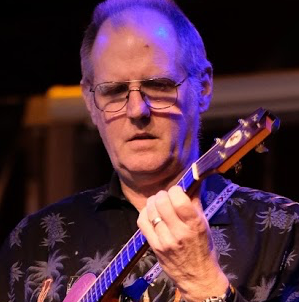
Many people feel that they cannot begin music after a certain age. This is a common myth. Age proves no obstacle to the enjoyable pursuit of music. The mature person has a better sense of his or her own needs, makes better use of time and understands the value and need for self-expression.
It is commonly thought that the study of music requires hours a day of boring practice. Rather than long, tedious practice, what is needed is a very efficient and interesting lesson plan in which students can develop their musical ability within the framework of their own available time.
It actually, simply comes down to doing the WORK!!!
How does anyone spend their leisure time? There is certainly no shortage of alternatives. The experience of music is a most satisfying pastime. It grows even more satisfying as students begin to develop their ability to play.
Since music provides an opportunity to develop one's creative capacities, it should be part of everyone's educational experience. The concentration and discipline developed through the study of music is particularly valuable to children or adults who have never been exposed to creative music in the traditional school setting.
Music, so popular with youth, is an excellent bridge to the so-called "generation gap". Music favors neither male or female, adult or child. It provides a unique opportunity for communication between parents and children. Though few take advantage of it, participation in music is one of the finest possible family activities.
Few people are aware of the many new developments in music education today. It is quite common to identify music lessons with the boring and repetitive exercises of many years ago. In contrast to this, our approach and material are uniquely suited to the needs of the contemporary student.
Anyone who has accepted responsibility in life has unavoidable pressure. It is most necessary to have a way to relax from the pressures of daily life. Music, with its emphasis on the relaxed exploration of sound, provides an excellent opportunity to escape from the tension and pressures of daily responsibility.
Thanks to Chuck Anderson for permission to use the above copy
Here are two flyers ( PDF files for download ) that I have as handouts for potential students and their parents. These have been very successful with new students.
When you listen to music, multiple areas of your brain become engaged and active. But when you actually play an instrument, that activity becomes more like a full-body brain workout. What's going on? Anita Collins explains the fireworks that go off in musicians' brains when they play, and examines some of the long-term positive effects of this mental workout.
Lesson by Anita Collins, animation by Sharon Colman Graham. View full lesson: How Playing an Instrument Benefits Your Brain - Anita Collins
NOTE: PICS ARE FROM VARIOUS SOURCES. FAIR USE NOTICE:: This site contains images of which have not been pre-authorized. This material is made available for the purpose of analysis, teaching, comment and critique. The 'fair use' of such material is provided for under U.S. Copyright Law. In accordance with U.S. Code Title 17, Section 107, material on this site (along with credit and attributions to original sources) is viewable for educational and intellectual purposes - (frwebgate.access.gpo.gov). If you are interested in using any copyrighted material from this site for any reason that goes beyond 'fair use,' you must first obtain permission from the copyright owner.

.jpg)
On the web since 1992 and a Mac since 1987 (Mac II) • Serving up Ukulele content since 2003 ( 23 years ago ) • Lets Kanikapila!!! • And, since Sept 2020, happily on Pop!_OS Linux & COSMIC-DE and a System76 Thelio . Half the cost of the iMac and a real treat to use. I use it for ALL development work. Only wish the Affinity Suite of apps by serif where available on Linux (and I do know you can run them in Wine with a few hacks).
v•L13.7.0 (PHP-8.3.6)
This sit has ben profesionaly red. awl tpyos aree free and no aditonal chrge • I'm blaming it on “jazz” fingers. “Aoccdrnig to rscheearch at Cmabrigde Uinervtisy, it deosn't mttaer in waht oredr the ltteers in a wrod are, the olny iprmoatnt tihng is taht the frist and lsat ltteer be at the rghit pclae. The rset can be a toatl mses and you can sitll raed it wouthit a porbelm. Tihs is bcuseae the huamn mnid deos not raed ervey lteter by istlef, but the wrod as a wlohe.”
Site developed, hand-coded, and maintained by Curt Sheller, Curt Sheller Publications , Pottstown, PA 19464 USA, North America, Northern Hemisphere, Earth, Solar System / Orion Arm of the Milky Way Galaxy, Virgo Supercluster, Laniakea Supercluster, Observable Universe ... and hosted on DigitalOcean , eCommerce using stripe , managed using Laravel Forge , and analytics (which we DO NOT share) by Plausible . See the CurtSheller.com Site Credits page for credit to all the hardware, software, tools, and goodies we use to build this amazing site. A proverbial digital blob of music information.
Made with by Curt Sheller for CurtSheller.com–Curt Sheller Publications and the ukulele community • © 1992 - 2026 Curt Sheller