.png)



Racewalking
Racewalking, or race walking, is a long-distance discipline within the sport of athletics. Although it is a foot race, it is different from running in that one foot must appear to be in contact with the ground at all times. This is assessed by race judges. Typically held on either roads or on running tracks, common distances vary from 3000 metres (1.8 mi) up to 100 kilometres (62.1 mi).
Racewalking
There are two racewalking distances contested at the Summer Olympics: the 20 kilometers race walk (men and women) and 50 kilometers race walk (men only). Both are held as road events. The biennial IAAF World Championships in Athletics also features the same events with the addition of a womens 50 kilometers walk. The IAAF World Race Walking Cup, first held in 1961, is a stand-alone global competition for the discipline and it has 10 kilometers race walks for junior athletes, in addition to the Olympic-standard events. The IAAF World Indoor Championships featured 5000 m and 3000 m race walk variations, but these were discontinued after 1993. Top level athletics championships and games typically feature 20 km racewalking events.
2021 Update: Starting with the World Athletics Championships Oregon `22 and the 2024 Paris Summer Olympic the 50km distance has been dropped and changes to a 35km for both men and women.
The sport emerged from a British culture of long-distance competitive walking known as pedestrianism, which began to develop the rule set that is the basis of the modern discipline around the mid-19th century. Watching people walk was America's favorite spectator sport in the late 19th century. Since the mid-20th century onwards, Russian and Chinese athletes have been among the most successful on the global stage, with Europe and parts of Latin America producing most of the remaining top level walkers.
Compared to other forms of foot racing, stride length is reduced; to achieve competitive speeds racewalkers must attain cadence rates comparable to those achieved by world-class 800 meters runners.
The learn all about racewalking in the US go the USATF Race Walking site. For even more information beyond what is here on my site go to Dave McGovern's World Class Racewalking/Power Walking or Racewalk.com.
IAAF Introduction To Race Walking
Written by Maurizio Damilano ; Technical Consultant Sandro Damilano (Saluzzo Race Walking School); produced by IAAF. Maurizio Damilano was the 1980 Olympic Champion and the 1987 and 1991 World Champion in the 20 km race walk.
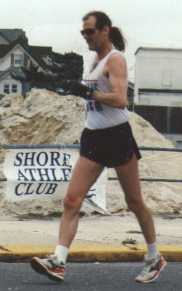
Polar Bear 10 Mile Racewalk, Asbury Park, NJ
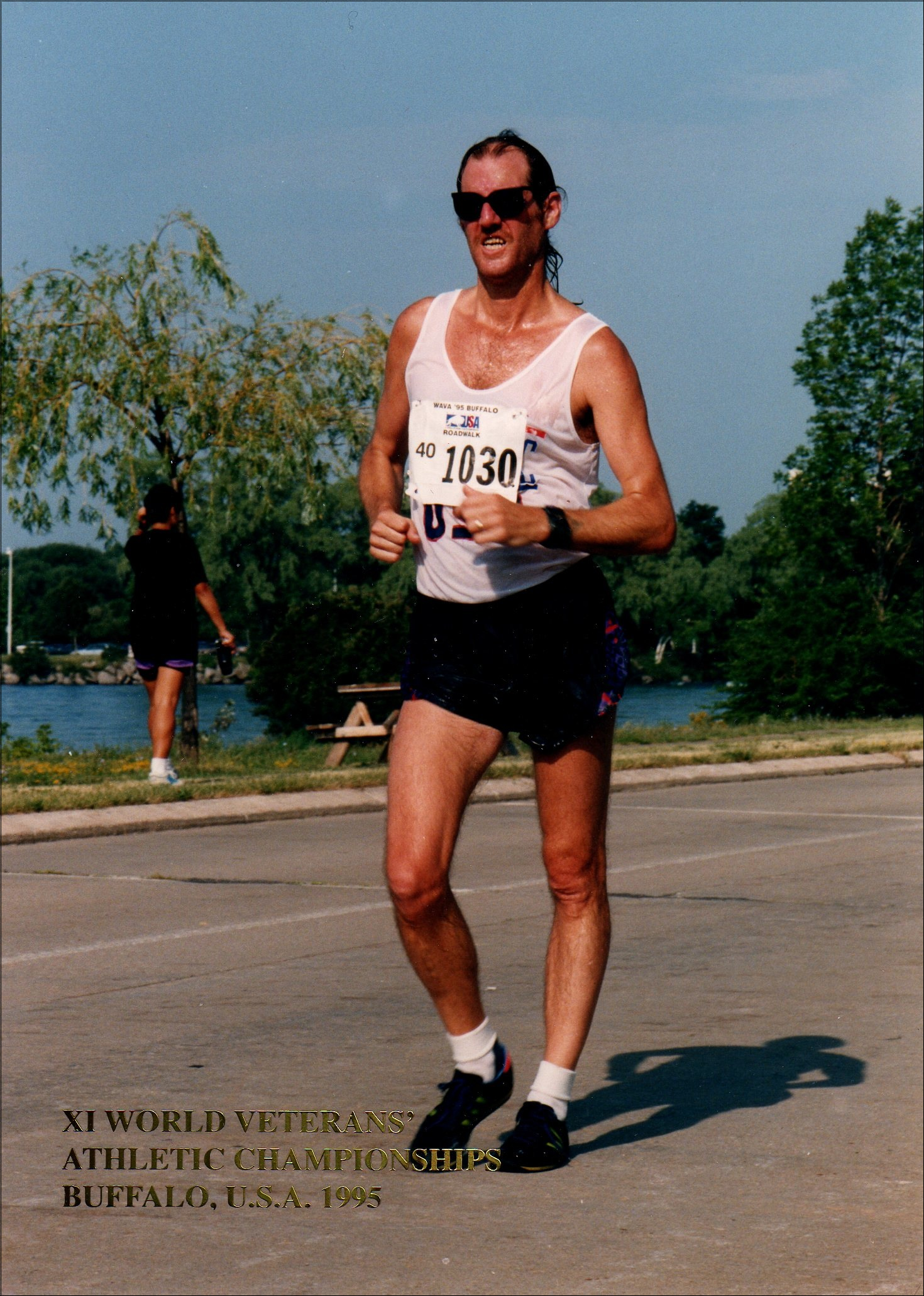
20 km, XI World Veterans Athletic Championships, Niagara Falls, NY 1995 ( bronze medal mx-4 40-45 age group )
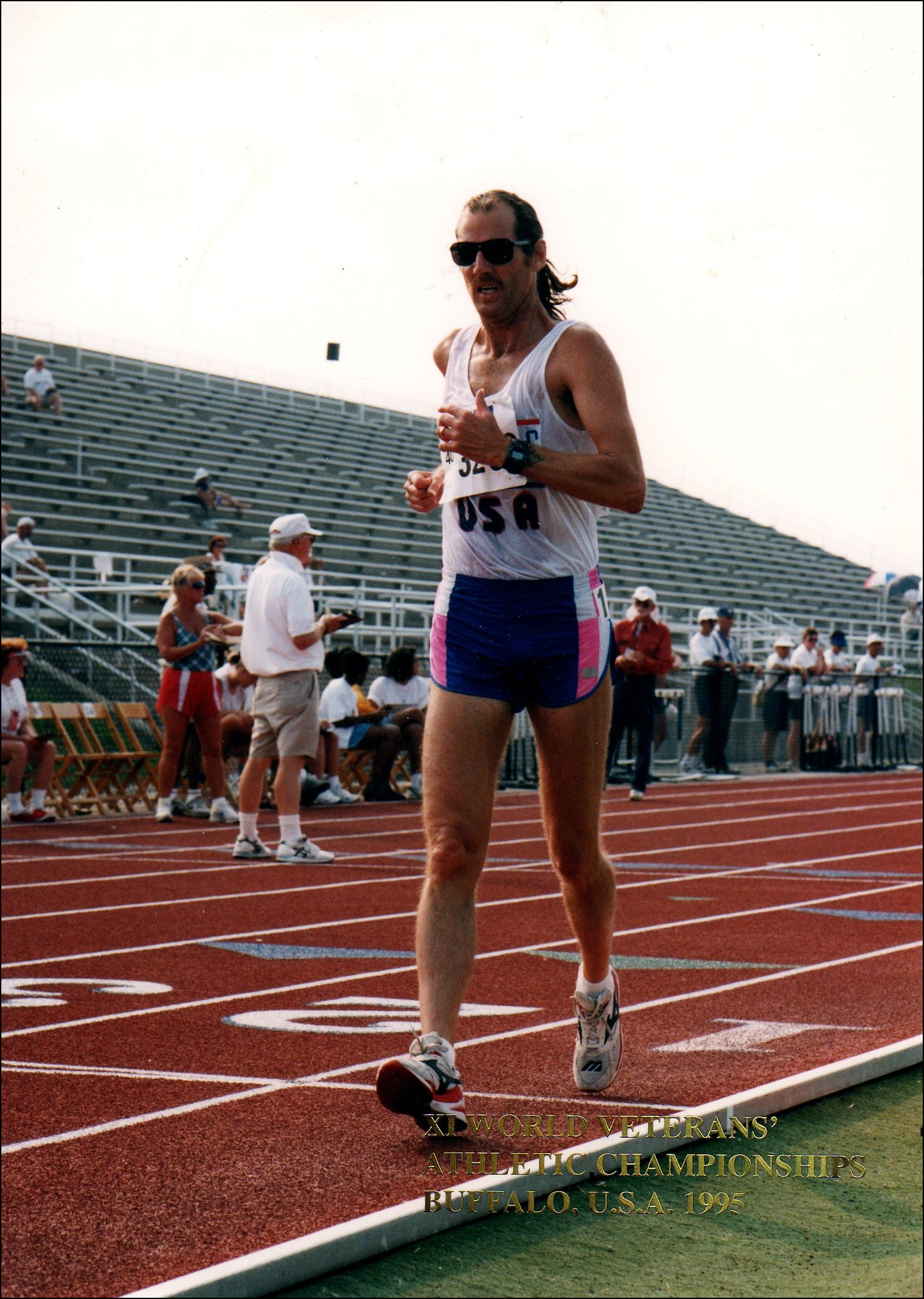
5 km, XI World Veterans Athletic Championships, Buffalo, NY 1995
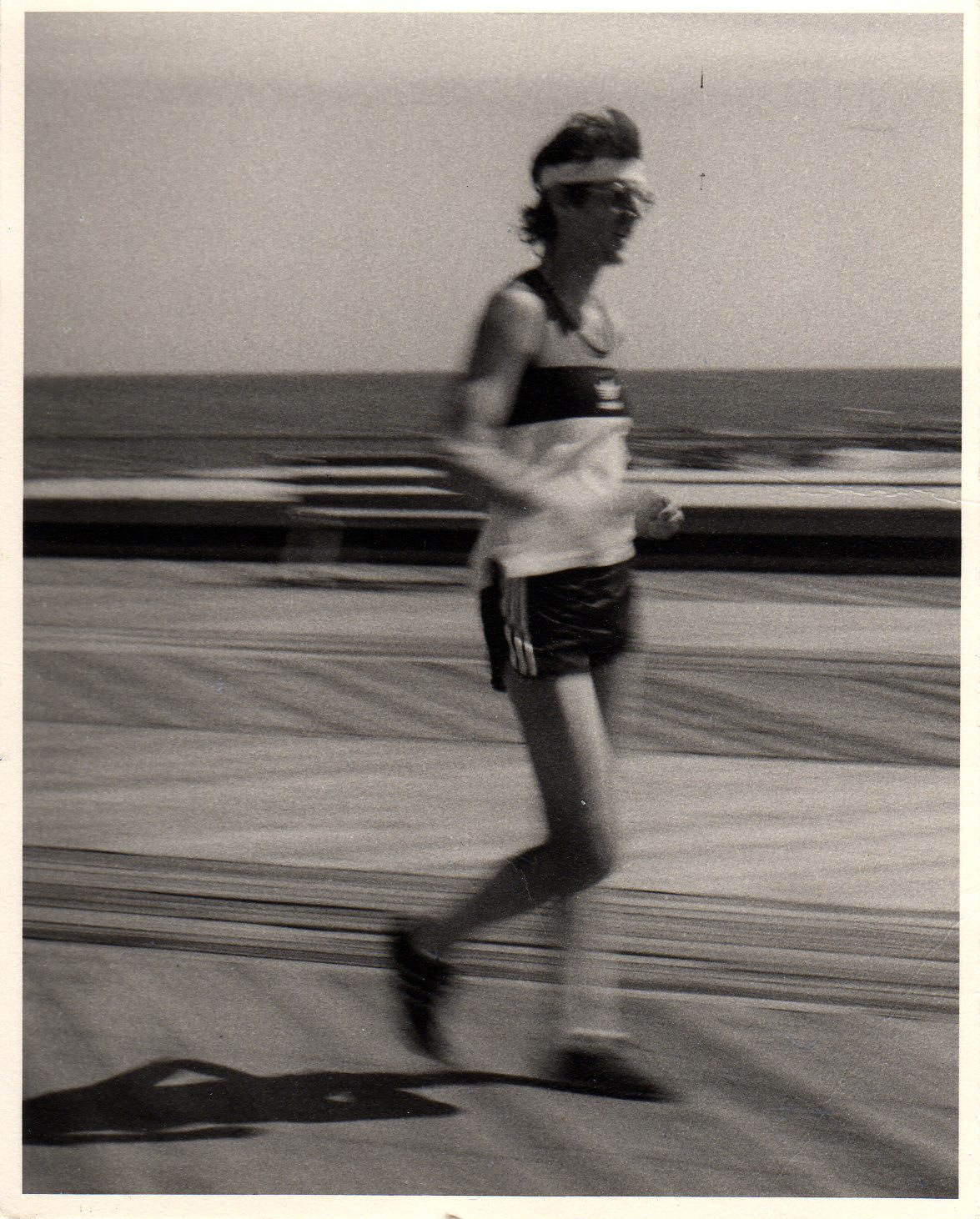
Ronn Zinn 10 Miler, April 1988, Asbury Park, NJ

Links
Listing Info
from the World Class Racewalking/Power Walking web site
Dave McGovern is America's foremost walking coach and clinician. A 30-year veteran of the US National Racewalk Team with a master's degree in sport science/sports medicine from the United States Sports Academy, Dave has conducted up to 20 clinics and camps per year throughout North America as well as Europe, and South and Equatorial Africa, since 1991. Many of Dave's clinic alumni have lost weight, bounced back from heart disease and diabetes, and completed marathons, while others have won national championships, set age-group world records, and even made Olympic teams!
During his nearly 40-year competitive career Dave won 15 U.S. national championships and walked 20 kilometers (12.4 miles--one of the two Olympic distances for men) in 1:24:29--a 6:48 per-mile pace--which ranks him as the fastest American ever to not make an Olympic team. (Onward to 2024!) Dave represented the US on 20 international teams, including seven World Cup and six Pan Am Cup teams, and he is the only track and field athlete in US history to qualify for nine consecutive US Olympic Trials! Still competing at a high level at the age of 55, Dave won the 2016 USA Track and Field 10-kilometer Racewalk Championship, and placed 9th at the 2020 US Olympic Trials in the 50k racewalk.
More information available on the World Class Racewalking/Power Walking's web site.
Even more information, discussion and comments on this listing below.
Shore AC

The Shore A.C. 1401 3rd Ave Spring Lake, NJ 07762
Links
Listing Info
from the Shore AC web site
The Shore Athletic Club is truly a club for all athletes and all seasons. We field "varsity" and local men's and women's teams competing in every event within the sport, and on every level, youth to juniors to "open" to Sub-Masters and Masters.
The Shore AC's official birth year is 1934. The club went through its earlier eras of the 30s and 40s marked by some incredible feats - began anew in the late 40s and endured to the early 50s. In 1964, the "new" Shore AC was born and we've been doing so many great new things ever since. We have over 500 members. Most live in New Jersey but quite a few reside far beyond NJ. And some quite far beyond. In addition to competing in all these events, the club itself puts on an incredible array of events for all to take part in and enjoy to the utmost. And we cap each year with a wonderful awards banquet each January.
More information available on the Shore AC's web site.
Even more information, discussion and comments on this listing below.
Robert Korzeniowski
Four time Olympic medalist, three 50Km golds in a row, double gold medal winner Sydney Olympics 2000 - Robert Korzeniowski . Robert Korzeniowski Special K
has to be considered the greatest race walker ever.
International Association Link
National Masters News
149 Orange Blossom Circle,
Folsom CA 95630
USA
Links
Listing Info
from the National Masters News web site
Today’s seniors are not the golden agers of old; they are active, they are competitive. National Masters News provides them the opportunity to see what their peers are doing, to see how they measure up, and to discover how much fun Masters sports can be.
Providing training and nutritional advice, meet results and highlights, annual rankings lists and sport current events, National Masters News provides a forum for all involved in MTF to share their stories and photos, find information about the sport and discover what a tremendous thing it is to still be able to do that which they love, at any age.
More information available on the National Masters News's web site.
Even more information, discussion and comments on this listing below.

Links
Listing Info
from the USATF Masters web site
USATF Masters track and field and LDR consists of local, regional, national and international competition opportunities for athletes 35 years of age and older. In addition, there is a “sub-masters” category for athletes 30 to 34 years of age.
All levels of ability are welcomed and encouraged to participate. VERY few meets require qualification standards, you do however need to be a USATF Member.
Masters track and field actively promotes fitness, friendship, volunteerism, athletic development, competition, sportsmanship and is inclusive.
More information available on the USATF Masters's web site.
Even more information, discussion and comments on this listing below.

Links
Listing Info
from the World Masters Athetics web site
The History of Masters/Veteran Athletics (abbreviated) Founding fathers of the masters movement: Earliest veteran competitors were mainly road-runners. IGAL (Interessen-Gemeinschaft Alterer Langstreckenlaufer = Partnership of Older Long Distance Runners) formed in 1968. First Marathon CHs in Holland. NZL had early runners movements, and the interests were imported to the USA, leading after 1965 to the formation of the USA Masters Track and Field Team (San Diego Attorney David Pain). International Veteran Track and Field meets followed.
World Masters Athletics, the World Association of Masters Athletes. The organization designated by the IAAF to conduct the worldwide sport of Masters (Veterans) and Athletics (Track and Field).
More information available on the World Masters Athetics's web site.
Even more information, discussion and comments on this listing below.
Misc Great Racewalking Information Around the Web
( 2018 Update ) - Getting back into training and competitive walking and
I'll be updating these pages over time as I progress. ( Look out John S.! )
- USATF Racewalking Page - [ link ]
- America's Walking PBS series hosted by Mark Fenton
America's Walking is a new weekly fitness, travel and lifestyle series designed to get you walking. Hosted by Mark Fenton, the country's foremost expert on walking and pedestrian issues, the television series travels around the country interviewing leading experts and regular folks struggling to maintain an active, healthy lifestyle.
- Dave McGovern's Worldclass Walking
Check out Dave's website. Dave has been a national class racewalker for many years and a great competitor. Dave's World Class Racewalking Clinics have been getting rave reviews everywhere one is staged.
- Race Walk Planet Radio
Race Walk Planet Radio, the only podcast devoted exclusively to news, information, results, and interviews about our favorite Olympic sport.
- Wyoming Valley Striders Home Page Maria Moulton and Gloria Rawls are members of this club as well as racing for the Shore AC
- Jeff Salvage's Web Site
- New York Road Runners - The annual New York City Marathon has an elite racewalk division. Plus numerious walkers always walk this race.
- NARF
International Sites
- Athletics Australia
- Queensland Race Walking Club Inc
- Australian Centurions' website
- Denis Strangman Canberra, Australia
- Athletics Canada
- British Athletics
- Deutscher Leichtathletik Verband (DLV)
- Frederazione Italiana Di Atletica Leggera
- Norges Gan-og Turmarsjforbund
- Athletics New Zealand
- Athletics South Africa
- Swedish Walking Federation
- USA Race Walking
Race Timing
- BEST Racing Systems - Systems Specialists in Road Race Computerized Scoring and Finish Line Management
- L M ComputerSports &Event Productions, Inc. - Road Races - Triathlons - Swims - Special Events
Just browsing over both books, they look fantastic! I'm a guitarist and uke player for over 25 years and was thinking about writing a ukulele book but you've already written what I think are the best, most comprehensive and thorough books I've ever seen for the instrument. I just might end up buying every book you've written and I'll be giving my highest recommendation for your books to my friends and students. Thank you so much for taking the time to write such great books! — Peter Rhee
Aloha, Curt, All I can say is WOW! What you have accomplished is simply incredible! All the best — Glen Hirabayashi, The Aloha Boys
Folks, if you haven't stopped by Curt's site, do so right now! ..And get his books, they are fantastic. This guy knows his stuff and is able to pass it along too. — Alan Johnson Proprietor, The 4th Peg
I can highly recommend Curt's Uke books — I have four of them and they are excellent. — fatveg — Portland
Thanks for visiting and checking out the site!

Original Animation by Curt Sheller - 1987 for my first web site 37 years ago.